Design Leadership
FanDuel Design Leadership
I created a design culture of high performing teams
Role :
Design Director
Business Impact :
Built a High Performing Design Team & Collaborative Culture
Problem :
"Just make it pretty, you don't need to know the why." This was the answer from the VP of Product when asked for a little more info on why we were adding a new button to one of the screens.
When I joined FanDuel it had a very siloed design culture. Most design requests came through Jira tickets with a date. Teams were silo'd, separate processes, and barely worked together.
Solution :
I instilled a design culture in FanDuel focused on 5 core pillars:
1. Design Leadership
2. Alignment
3. Execution
4. Engagement
5. Trust
Design Leadership
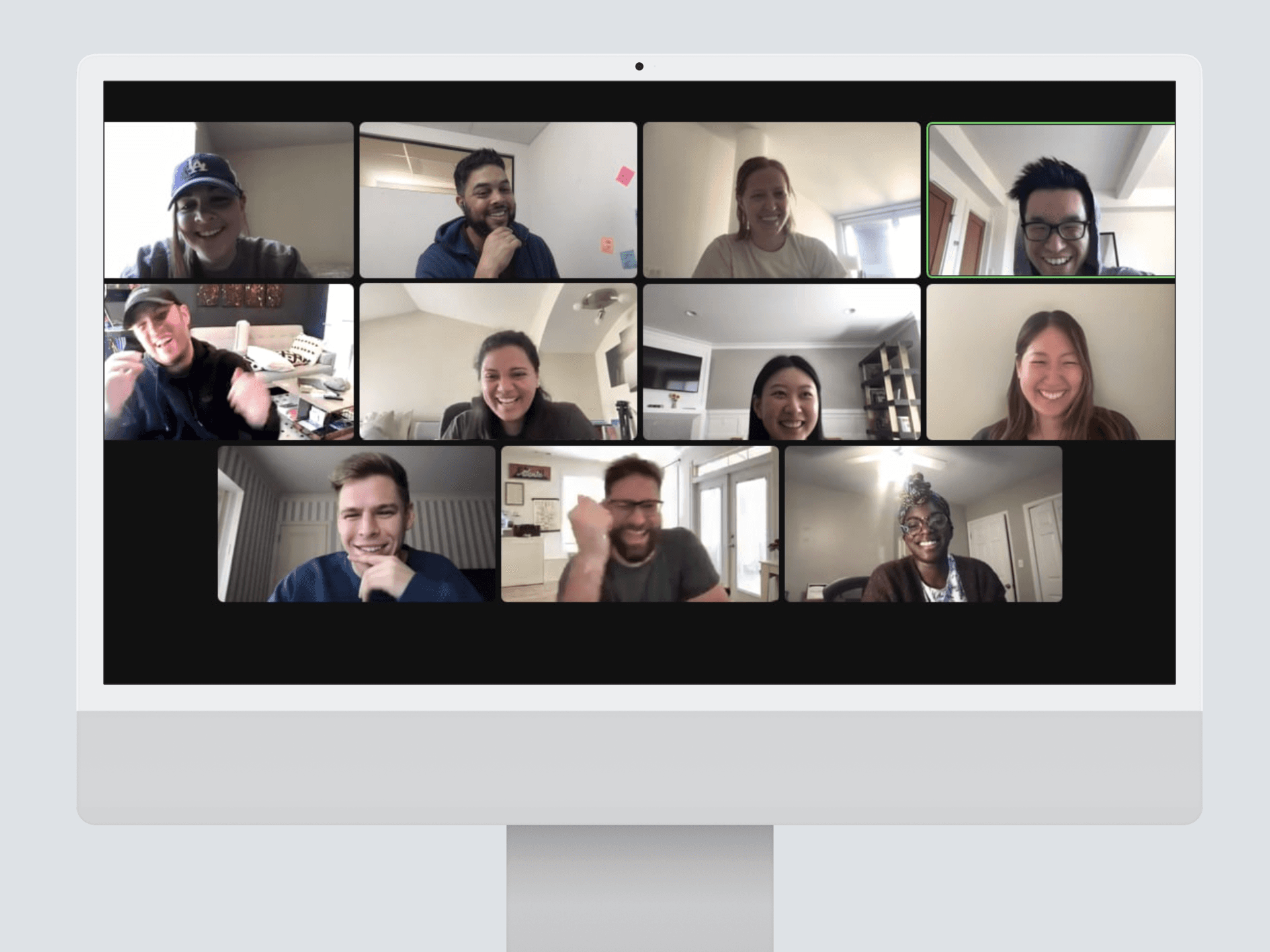
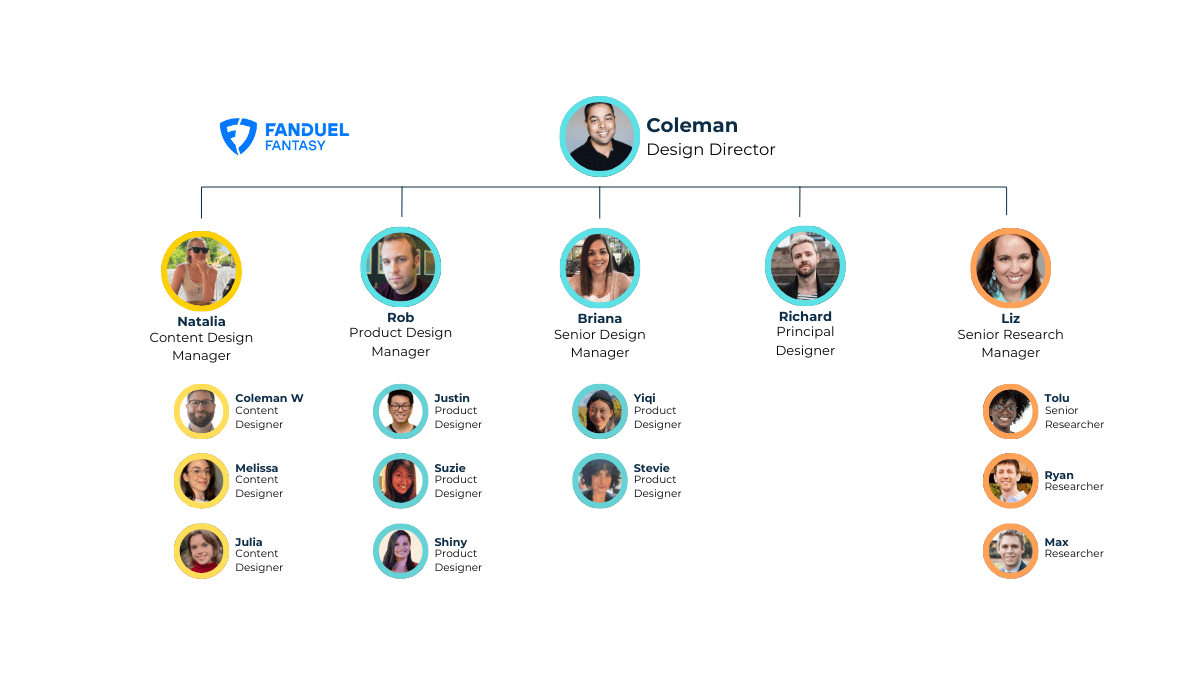
I grew my team from 2 to 16 which included IC's and senior managers. This team consisted of Design, Research, and Content spanning three divisions.
I instilled a proper design process, established design principles, created a team identity, and leaned into coaching to become a strong design unit.
Aligned To The Business
I proactively led strategic design initiatives. The biggest one was approved by our CEO and incorporated into her strategy.
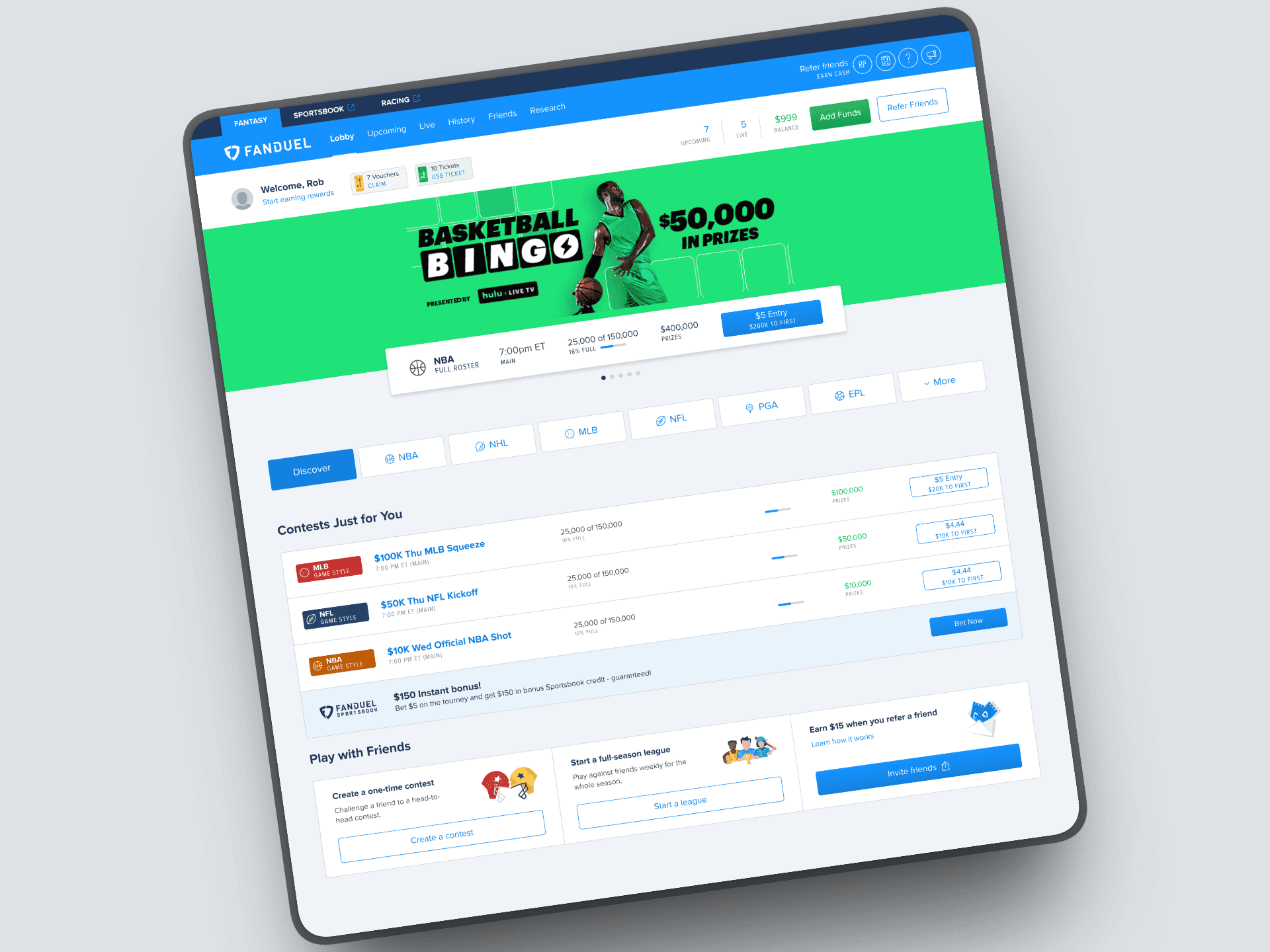
The design initiatives I pitched and led resulted in: doubling lifetime user value of our priority cohort; establishing a design division that directly owned changes to our product; 12% increase in CSAT scores: and 8% increase in homepage conversions.
Execution
I focused on partnering and aligning with other orgs. This includes developing common tools and processes on how we all work together on equal footing.
This includes the usual suspects: Product, Engineering, Research, and Content. But it goes beyond that to include Marketing, Commercial, Legal, Analytics, and Operations.
Engagement
I made sure my team had meaningful work, a healthy career, and generally overall enjoyed what they were doing.
Trust
Everything above is underpinned by building trust within my team and my organization. It comes down to three things:
Competent
Having a deep understanding of design, the role of a design org in a business, problem framing, and developing the best solution for the business and users.
Sincere
Actually caring about your team and helping them achieve their goals.
Reliable
Being there for the good and the bad.
Summary :
One Team
Our design culture went from:
"FYI, we're kicking off Project X in two days, we need final designs by then."
To:
"Collaboration is in our DNA", shipping products shaping the corporate strategy, and blended teams.
More Projects


Design Leadership
FanDuel Design Leadership
I created a design culture of high performing teams
Role :
Design Director
Business Impact :
Built a High Performing Design Team & Collaborative Culture
Problem :
"Just make it pretty, you don't need to know the why." This was the answer from the VP of Product when asked for a little more info on why we were adding a new button to one of the screens.
When I joined FanDuel it had a very siloed design culture. Most design requests came through Jira tickets with a date. Teams were silo'd, separate processes, and barely worked together.
Solution :
I instilled a design culture in FanDuel focused on 5 core pillars:
1. Design Leadership
2. Alignment
3. Execution
4. Engagement
5. Trust
Design Leadership
I grew my team from 2 to 16 which included IC's and senior managers. This team consisted of Design, Research, and Content spanning three divisions.
I instilled a proper design process, established design principles, created a team identity, and leaned into coaching to become a strong design unit.
Aligned To The Business
I proactively led strategic design initiatives. The biggest one was approved by our CEO and incorporated into her strategy.
The design initiatives I pitched and led resulted in: doubling lifetime user value of our priority cohort; establishing a design division that directly owned changes to our product; 12% increase in CSAT scores: and 8% increase in homepage conversions.
Execution
I focused on partnering and aligning with other orgs. This includes developing common tools and processes on how we all work together on equal footing.
This includes the usual suspects: Product, Engineering, Research, and Content. But it goes beyond that to include Marketing, Commercial, Legal, Analytics, and Operations.
Engagement
I made sure my team had meaningful work, a healthy career, and generally overall enjoyed what they were doing.
Trust
Everything above is underpinned by building trust within my team and my organization. It comes down to three things:
Competent
Having a deep understanding of design, the role of a design org in a business, problem framing, and developing the best solution for the business and users.
Sincere
Actually caring about your team and helping them achieve their goals.
Reliable
Being there for the good and the bad.
Summary :
One Team
Our design culture went from:
"FYI, we're kicking off Project X in two days, we need final designs by then."
To:
"Collaboration is in our DNA", shipping products shaping the corporate strategy, and blended teams.
More Projects
Design Leadership
FanDuel Design Leadership
I created a design culture of high performing teams
Role :
Design Director
Business Impact :
Built a High Performing Design Team & Collaborative Culture
Problem :
"Just make it pretty, you don't need to know the why." This was the answer from the VP of Product when asked for a little more info on why we were adding a new button to one of the screens.
When I joined FanDuel it had a very siloed design culture. Most design requests came through Jira tickets with a date. Teams were silo'd, separate processes, and barely worked together.
Solution :
I instilled a design culture in FanDuel focused on 5 core pillars:
1. Design Leadership
2. Alignment
3. Execution
4. Engagement
5. Trust
Design Leadership
I grew my team from 2 to 16 which included IC's and senior managers. This team consisted of Design, Research, and Content spanning three divisions.
I instilled a proper design process, established design principles, created a team identity, and leaned into coaching to become a strong design unit.
Aligned To The Business
I proactively led strategic design initiatives. The biggest one was approved by our CEO and incorporated into her strategy.
The design initiatives I pitched and led resulted in: doubling lifetime user value of our priority cohort; establishing a design division that directly owned changes to our product; 12% increase in CSAT scores: and 8% increase in homepage conversions.
Execution
I focused on partnering and aligning with other orgs. This includes developing common tools and processes on how we all work together on equal footing.
This includes the usual suspects: Product, Engineering, Research, and Content. But it goes beyond that to include Marketing, Commercial, Legal, Analytics, and Operations.
Engagement
I made sure my team had meaningful work, a healthy career, and generally overall enjoyed what they were doing.
Trust
Everything above is underpinned by building trust within my team and my organization. It comes down to three things:
Competent
Having a deep understanding of design, the role of a design org in a business, problem framing, and developing the best solution for the business and users.
Sincere
Actually caring about your team and helping them achieve their goals.
Reliable
Being there for the good and the bad.
Summary :
One Team
Our design culture went from:
"FYI, we're kicking off Project X in two days, we need final designs by then."
To:
"Collaboration is in our DNA", shipping products shaping the corporate strategy, and blended teams.